What is a box break?
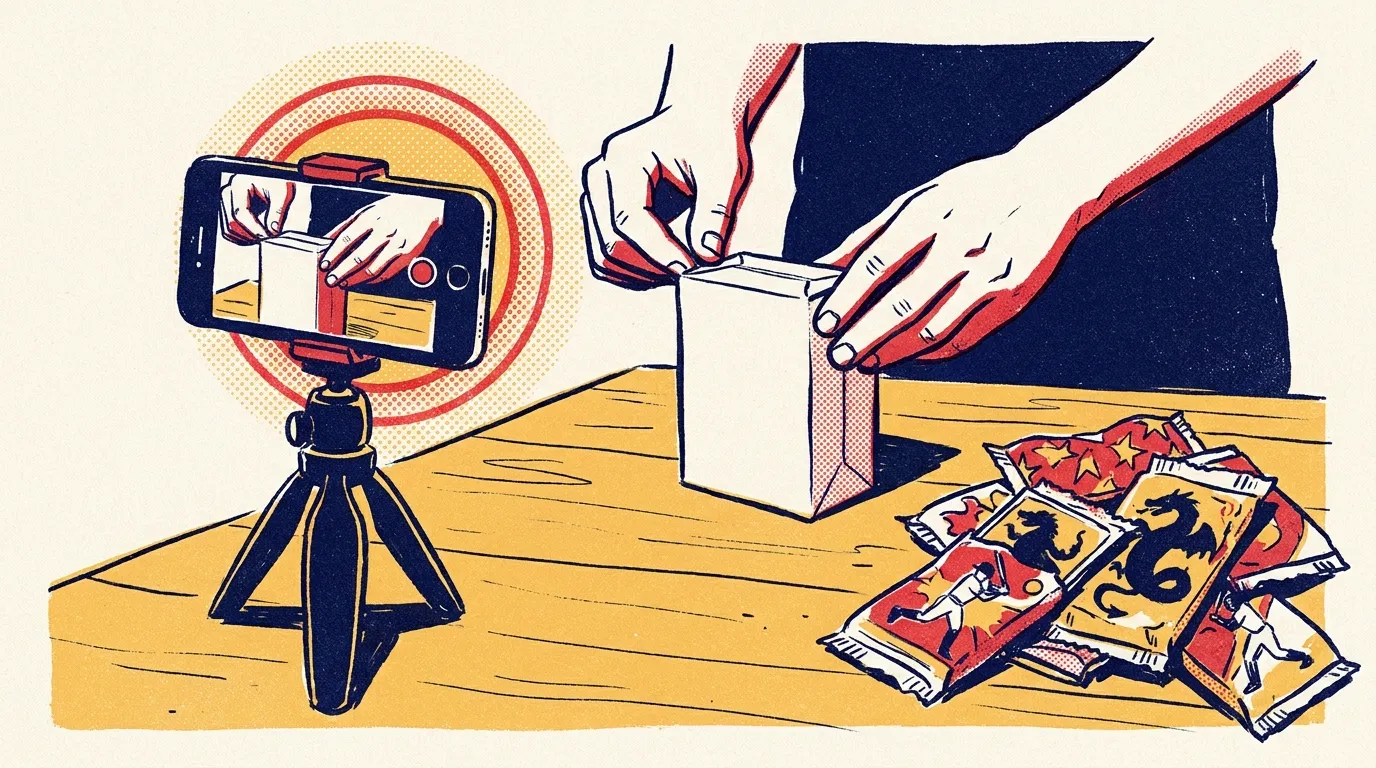
A box break is a group opening of sealed cards. One person, the breaker, opens a box or a case. Other people buy "spots" in the break. When the cards come out, each buyer gets the cards that match their spot, and the breaker ships them out.
Breaks started in sports cards, where a single hobby box can cost more than most people want to spend at once. They're now common for Pokémon, One Piece, Magic and other games too. Most happen on livestreams, and some card shops run them in the store.
Why people join breaks
- Lower cost to play. A spot costs a fraction of the whole box, so you can chase cards from products you couldn't buy outright.
- You only get what you want. In a team break, you get your team's cards and none of the ones you'd have to sell off.
- It's social. People watch together, chat and react when a big card shows up.
The other side: the total of all spots usually adds up to more than the box costs. The breaker charges for the work, the stream and shipping. Most spots end up with ordinary cards, and only a few get the big hits. Treat a break as entertainment you pay for, not as an investment.
The common break formats
Pick your team
Common in sports cards. Each spot is a team, and spots are priced by demand, so popular teams with hot rookies cost more. You choose the team you want and buy that spot. Every card in the break featuring that team's players goes to you.
Random team
All spots usually cost the same. Once every spot is sold, teams are assigned to buyers at random, usually with an online randomizer shown on stream. It's cheaper for popular teams, and a gamble for everyone.
Division and other splits
Some breaks group teams into divisions, or split by player, by position, or by "hit draft" where buyers take turns picking from the best cards. The rules vary, so read the listing before you buy.
Pack and slot breaks
Common in trading card games. Each buyer gets one pack, or one numbered slot in a box. The breaker opens your pack on camera and ships you what was inside. Some sellers call this "rip and ship."
Terms you'll hear
- Hobby box. A box sold through hobby shops rather than big-box stores. Hobby boxes often promise a set number of autographs, relics or other special cards.
- Case break. A break of a full sealed case, which holds several boxes. More cards, so more chances at hits per spot, but each spot costs more.
- Hit. A special card, such as an autograph, a memorabilia card, a low serial number or a chase card in a game set.
- Base. The standard cards in a set. Most of what comes out of any box.
- Parallel. A version of a base card with a different color, finish or serial numbering.
- PYT. Short for "pick your team."
Joining a break at a card shop
Some local shops host breaks in person or stream them from the store. Buying in at a shop has real advantages:
- You can see the sealed product and watch it opened in front of you.
- You can often pick up your cards in person instead of paying for shipping.
- You can ask questions face to face and come back if something goes wrong.
Ask the shop how spots are priced, when the break will run, and what happens if the break doesn't fill. On cardshops.org, shops are tagged "Box breaks" only when their customer reviews or their own website mention them. Schedules change, so check with the shop.
Joining a break online
Online breaks run on livestream shopping apps and on video platforms such as YouTube and Instagram. Popular breakers run many breaks a day. Before you buy a spot from someone new:
- Watch a few of their breaks first. See how they show the product, run the randomizer and handle questions.
- Read the rules. Look for how teams or spots are assigned, what the shipping cost is, and how long shipping takes.
- Check the platform's protections. Buying through the platform's checkout is usually safer than paying a breaker directly.
- Check the age rules. Most break platforms require buyers to be adults. Read the platform's terms.
What a good break looks like
- The sealed box or case is shown clearly on camera, wrap intact, before it's opened.
- The list of spots and who bought them is posted before the break starts.
- Random assignments use a randomizer shown on screen, not a hidden one.
- Every pack is opened on camera, and the hits are shown clearly.
- Shipping costs and timing are stated up front.
- The breaker explains what happens with base cards and with redemption cards, which are cards you mail in to the manufacturer for an item that wasn't ready at print time.
Red flags
- Boxes opened off camera, or wrap that looks loose or resealed.
- Randomizers that aren't shown on screen.
- A breaker who won't say what happens if spots don't sell.
- Pressure to buy more spots "before they're gone."
- Cards that never ship, or a seller who stops answering messages.
Tips for your first break
- Set a budget before the stream starts. Live breaks move fast, and it's easy to keep buying.
- Know the product. Look up the checklist for the box being opened so you know which cards are possible and what a "hit" means for that product.
- Pick teams you care about. If you'd enjoy the cards even if nothing big shows up, you'll enjoy the break.
- Protect what you get. Sleeve and toploader any good cards right away. See how to store and protect cards.
- Decide what's next for a big hit. If you pull something valuable, you can keep it, grade it or sell it. Our grading guide and selling guide walk through each option.
Breaks vs. buying the card you want
If you want one specific card, buying it as a single from a shop or marketplace is almost always more predictable than breaking for it. Breaks are about the chase. Singles are about getting the card. Many collectors do both: breaks for fun, singles for the cards they really want.