Card grading, explained
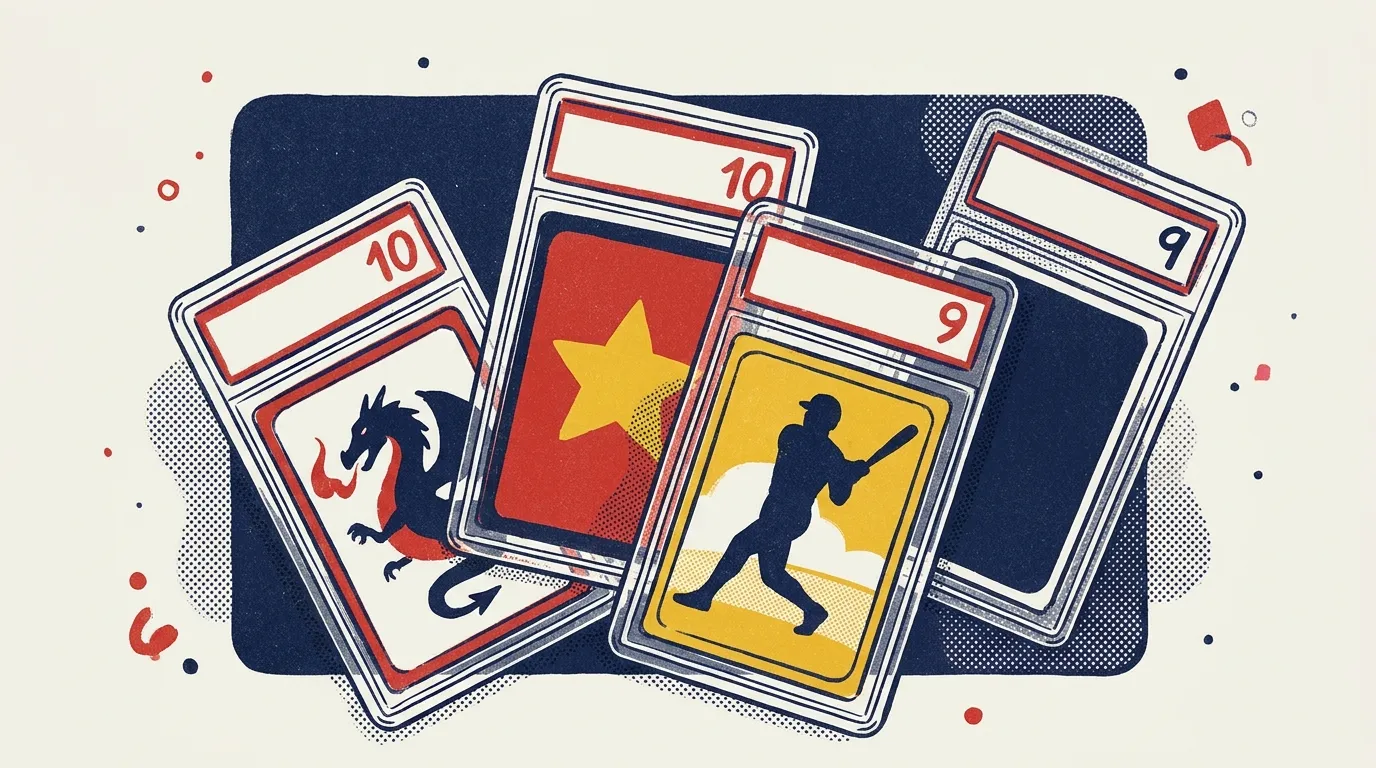
A graded card is a card that a third-party company has examined, given a condition score and sealed in a hard plastic case. Collectors call that case a slab. Grading turns a judgment call ("this looks mint to me") into a standard that buyers everywhere recognize.
This guide explains how grading works, who the major graders are, and how to decide whether a card is worth sending in. It doesn't list fees or turnaround times. Those change often and differ by service level, so check each company's website for current numbers.
What a grading company does
When you submit a card, the grader does three things:
- Authenticates it. They check that the card is real and hasn't been altered, for example trimmed, recolored or pressed.
- Grades its condition. Most graders use a 1 to 10 scale, where 10 is the top grade. Some also use half-point grades.
- Encapsulates it. The card goes into a sealed, tamper-evident holder with a label showing the card, the grade and a certification number.
That certification number matters. You can type it into the grader's website to confirm the slab is real and matches the card inside. Always do this before you buy an expensive graded card.
The major graders
Four companies come up most often in US card shops. Each grades both sports cards and trading card games, though each has its own reputation and following.
PSA
PSA (Professional Sports Authenticator) is the most widely recognized name, especially for sports cards and Pokémon. It uses a 1 to 10 scale with a single overall grade. Many collectors compare prices across graders using PSA as the reference point.
Beckett (BGS)
Beckett Grading Services is known for subgrades. Along with an overall grade, the label can show separate scores for centering, corners, edges and surface. That detail helps buyers see exactly why a card got its grade. Beckett's rare "Black Label" goes to cards with perfect scores in every subgrade.
SGC
SGC has a long history with vintage sports cards and is known for its black label insert, which many collectors like for display. It also grades modern sports cards and game cards.
CGC
CGC started in comic books and has become a major grader of trading cards, particularly Pokémon and other game cards. It also uses a 1 to 10 scale.
The "right" grader depends on the card and the buyers you want to reach. Look at sold prices for the same card in slabs from different graders. That tells you how the market values each one for your card.
What affects a grade
Graders look at four main things. A flaw in any one of them can cap the grade.
- Centering. How evenly the image sits inside the borders, front and back. A card that's visibly off-center can't get a top grade.
- Corners. Sharp, square corners score best. Any rounding, fraying or dings show up under magnification.
- Edges. Look for chipping, nicks or whitening, especially on cards with colored borders.
- Surface. Scratches, print lines, dimples, stains, fingerprints and creases. Holofoil cards scratch easily.
Factory flaws count too. A card can come out of a fresh pack off-center or with a print line, and it will be graded on how it looks, not on how it got that way.
How to check a card before you submit
You can catch most deal-breakers at home:
- Use a bright light and tilt the card to see surface scratches and dents.
- Use a magnifier or jeweler's loupe on the corners and edges.
- Compare the borders on each side to judge centering. Check the back too.
- Look up the grader's population report. It shows how many copies of a card have received each grade, which helps you judge how scarce a high grade is.
Never try to "fix" a card by pressing, trimming or cleaning it with chemicals. Graders look for alterations, and an altered card won't get a normal number grade.
When grading is worth it
Grading costs money, and the slab doesn't add value on its own. It's worth it when the grade is likely to raise the card's price by more than the total cost of grading and shipping. That usually means:
- Valuable cards in excellent condition. The bigger the price gap between a raw copy and a high-grade slab, the better the case for grading.
- Cards where authenticity matters. Vintage cards and popular cards that get counterfeited are easier to sell with a grader's verification.
- Cards you plan to sell to buyers who won't see them in person. A grade answers the condition question for an online buyer.
- Personal favorites you want protected for the long term. Some collectors grade cards they'll never sell, just for the protection and display.
Grading usually isn't worth it for low-value cards, cards with visible wear, or modern cards that already exist in large numbers at top grades. Do the math with real sold prices before you submit.
How submitting works
- Pick a grader and service level. Service levels are usually based on the card's declared value and how fast you want it back. Some service levels require a paid membership.
- Fill out the submission form online. List each card and declare its value honestly. The declared value affects the fee and the insurance coverage.
- Pack the cards the way the grader asks. Most want each card in a penny sleeve and then a semi-rigid holder, not a screw-down case. Check the grader's packing instructions.
- Ship with tracking and insurance. Keep your receipt and submission number.
- Wait. Turnaround depends on the service level and how busy the grader is. Most graders show the status of your order online.
Grading drop-off at a card shop
Some card shops collect cards from customers and submit them in bulk, or act as a drop-off point for a grader. It can be a good option if you don't want to handle the forms and shipping yourself, or if you'd like someone experienced to look at your cards first.
If you use a shop's service, ask:
- Which grader and service level they use, and the total cost per card including their fee.
- How they insure cards while the cards are with them and in transit.
- How they'll contact you when the cards come back, and how long they'll hold them.
On cardshops.org, a shop is tagged "Grading drop-off" only when its customer reviews or its own website mention it. Even then, policies change, so call ahead.
Buying graded cards
Fake slabs exist. Before you pay for a graded card, look up the certification number on the grader's site and make sure the card, year and grade match. Check that the label print looks clean and the case isn't cracked or reopened. Buy expensive slabs from sellers you can hold accountable.
Store slabs upright in a slab box or display stand, away from direct sunlight. Slabs protect against handling, not against heat or a fall onto a hard floor.