Starting a card collection
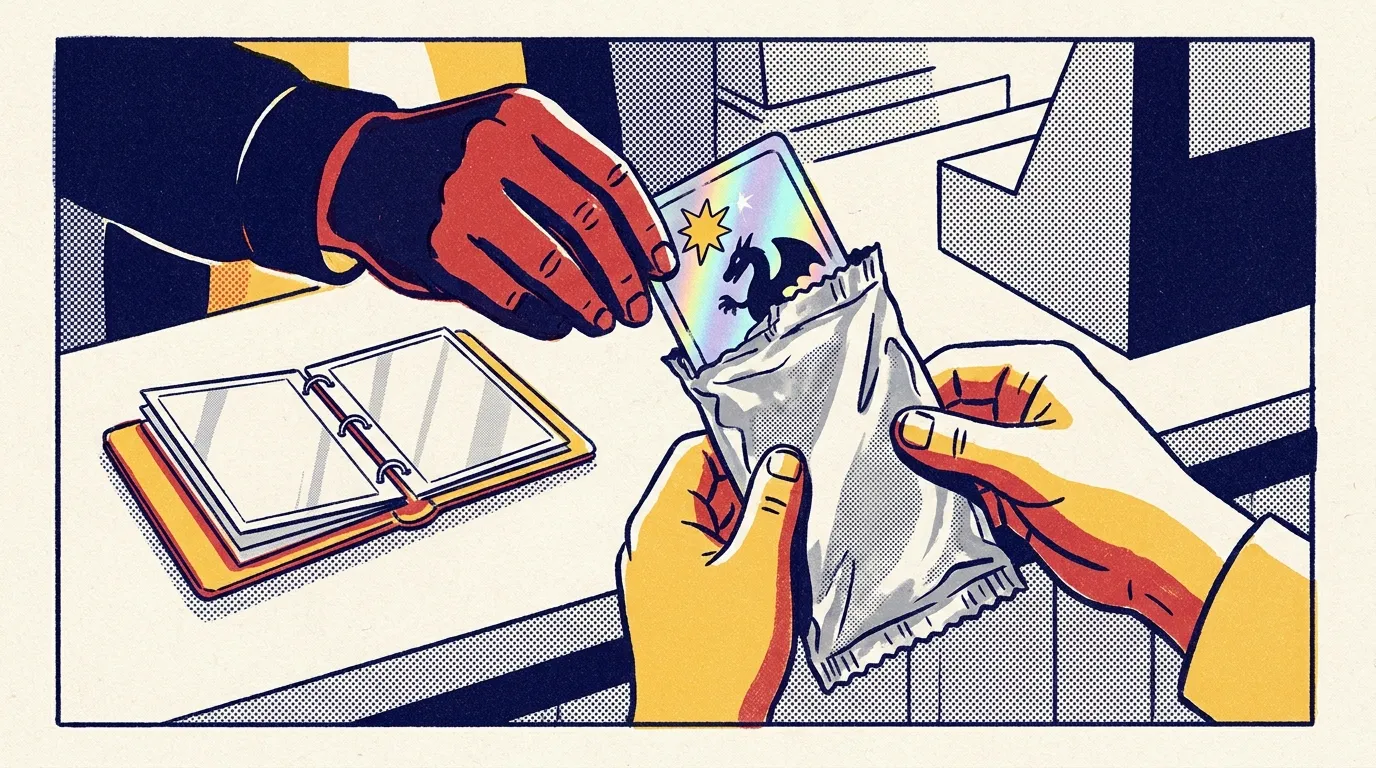
Starting a card collection is easy. Starting one you'll still enjoy in a year takes a little planning. The most common beginner mistake is buying a pile of random packs, getting a pile of random cards, and losing interest. A clear goal and a budget fix that.
This guide is for new collectors of any age, and for parents helping a kid get started.
Decide why you're collecting
People collect cards for different reasons, and the reason shapes what you should buy.
- To play. You want cards that work in a deck. You'll care about rules, formats and the local events at your card shop.
- To collect. You want cards you love looking at: a favorite Pokémon, a full set, a player's rookie cards, an artist's work.
- For the thrill of opening packs. That's fine, but it gets expensive. Set a firm budget.
Be careful with collecting purely as an investment. Card prices can drop as fast as they rise, and new printings can lower the value of cards people thought were scarce. Buy what you'd be happy to own even if the price fell.
Pick a game or sport
Starting with one game keeps things simple. A few of the big ones:
- Pokémon. One of the most widely collected card games. Easy to learn, with art and characters people of every age know. Strong both for play and for collecting.
- Magic: The Gathering. A deep strategy game with many ways to play. Commander, a casual multiplayer format, is a popular starting point.
- Sports cards. Baseball, basketball, football, hockey, soccer and more. Most people collect a favorite team or player, or chase rookie cards.
- One Piece, Yu-Gi-Oh!, Lorcana, Star Wars: Unlimited, Flesh and Blood and Digimon. Each has its own fans, products and store events.
If you want to play with others, find out what people play at the shops near you. A game nobody plays locally is harder to enjoy. Browse card shops by game to see which shops carry each one.
Sealed packs or singles?
This is the biggest choice for a new collector, and it's worth understanding early.
Sealed product
Sealed product means packs, boxes and sets that haven't been opened. Opening a pack is fun because you don't know what's inside. That randomness is also the catch: you might open a lot of packs and never get the card you want.
Good sealed starting points include starter decks and beginner boxes, which give you a complete, playable deck. Pokémon, Magic and most other games sell them. For sports cards, shops usually carry hobby boxes, which are sold through hobby shops and often guarantee certain kinds of cards per box, while big-box stores carry retail product.
Singles
A single is one card bought on its own. If you want a specific card, buying the single is almost always cheaper and faster than opening packs until it shows up. Card shops keep singles in display cases or binders, and staff can help you find what you need.
Many collectors land on a mix: a few packs for fun, singles for the cards they actually want.
Set a budget, and stick to it
- Pick a monthly amount you're comfortable spending, before you walk into a shop.
- Decide in advance how much of it goes to packs and how much to singles or supplies.
- Don't chase. When you didn't get the card you wanted, buying "just one more" pack is how budgets disappear. Buy the single instead.
- Leave room for supplies. Sleeves, toploaders and a binder are part of the cost of collecting.
Prices for popular new products can swing above the printed retail price when demand is high. Shops set their own prices. If a price surprises you, ask about it, or wait. Hot products often calm down after release.
Give your collection a goal
Goals keep collecting fun and stop random spending. Some ideas:
- Complete a set. Most cards show a number like "45/198," so you always know what's missing.
- Collect every card of one Pokémon, one player or one team.
- Build one strong deck and get good with it.
- Collect the work of one artist you like.
Protect cards from day one
Condition matters. A card you love today might be one you want to sell or trade later. Start with the basics: penny sleeves and toploaders for good cards, a side-loading binder without PVC pages for display, and a storage box for the rest. Keep everything away from heat, humidity and sunlight. Our storage guide covers it all.
Watch out for fakes
Counterfeit cards are common, especially for popular games. Warning signs include prices that seem too good to be true, unusual colors or fonts, flimsy or glossy card stock, and spelling errors. Fakes show up in cheap bulk lots and from sellers with no history. Buying from a local shop or a seller with a solid reputation lowers the risk. If you're unsure about a card, ask staff at a card shop to look at it.
Trading
Trading is one of the best parts of the hobby. Keep your trade cards in a separate binder from the ones you won't part with. Look up values before you trade so both sides know what's fair. Parents: kids trade at school and at events, so talk with them about what's fair and what's off-limits.
Find a local card shop
A good local card shop is the best resource a new collector can have. You can see cards in person, buy singles, ask questions, pick up supplies, and join events when you're ready. Many shops are happy to help beginners and parents figure out where to start.
Find shops near you on card shops by state. Each listing shows the games a shop carries, but only when its customer reviews or its own website show it, with the review quote or source next to each one.
When you're ready to play, read your first locals tournament. If you ever want to sell, see how to sell your card collection. And if a pull ever looks special, card grading, explained covers whether to grade it.